What is biology? At its root, the word comes from the Greek bios, meaning "life," and logos, meaning "reason." Simply put, biology is the study of life.
In our Elementary classrooms at Montessori Academy of New Jersey (MANJ), biology is far more than a traditional science subject. It serves as a gateway to wonder, connection, and a deeper understanding of our place in the larger story of life on Earth.
A Living Subject in a Living Curriculum
Dr. Maria Montessori saw biology as essential to Cosmic Education—a curriculum specifically tailored for children in the second plane of development (ages 6 to 12). Its goal is to help students see how everything in the universe is interconnected.
In this context, biology is not about memorizing facts for a quiz. It is about discovering how plants, animals, water, minerals, and the air work together in a grand collaboration. Through this lens, children learn that every species carries a cosmic task—a unique role in sustaining life on Earth:
- Plants draw minerals and water from the soil, protect the earth from erosion, and purify the air.
- Animals depend on plants for food while helping to pollinate, fertilize, and spread seeds.
Each element takes what it needs and gives something back. At MANJ, children explore these ideas deeply, building both scientific knowledge and a sense of moral and ecological awareness.
Bringing Science to Life Through Real Experiences
Elementary-age children are naturally imaginative, curious, and eager to understand how the world works. That is why biology at MANJ isn't taught through textbooks—it is brought to life through hands-on exploration and real specimens:
- Hands-on First: Lessons begin with tangible objects. A single seed, a fallen leaf, or a live plant offers far more engagement than a diagram on a page. Children observe, touch, ask questions, and test hypotheses.
- Deep Conceptual Learning: As children examine the parts of a flower or observe how water travels up a stem, they naturally progress toward learning functional anatomy, classification systems, adaptation, and evolution.
Moral Considerations and Stewardship
Because children at this age are actively developing their sense of ethics and fairness, we approach biology with deep respect for living things. We intentionally avoid cutting plants carelessly or keeping animals solely for observation. Instead, we invite thoughtful discussion:
"Is it right to pick a flower just to examine it?"
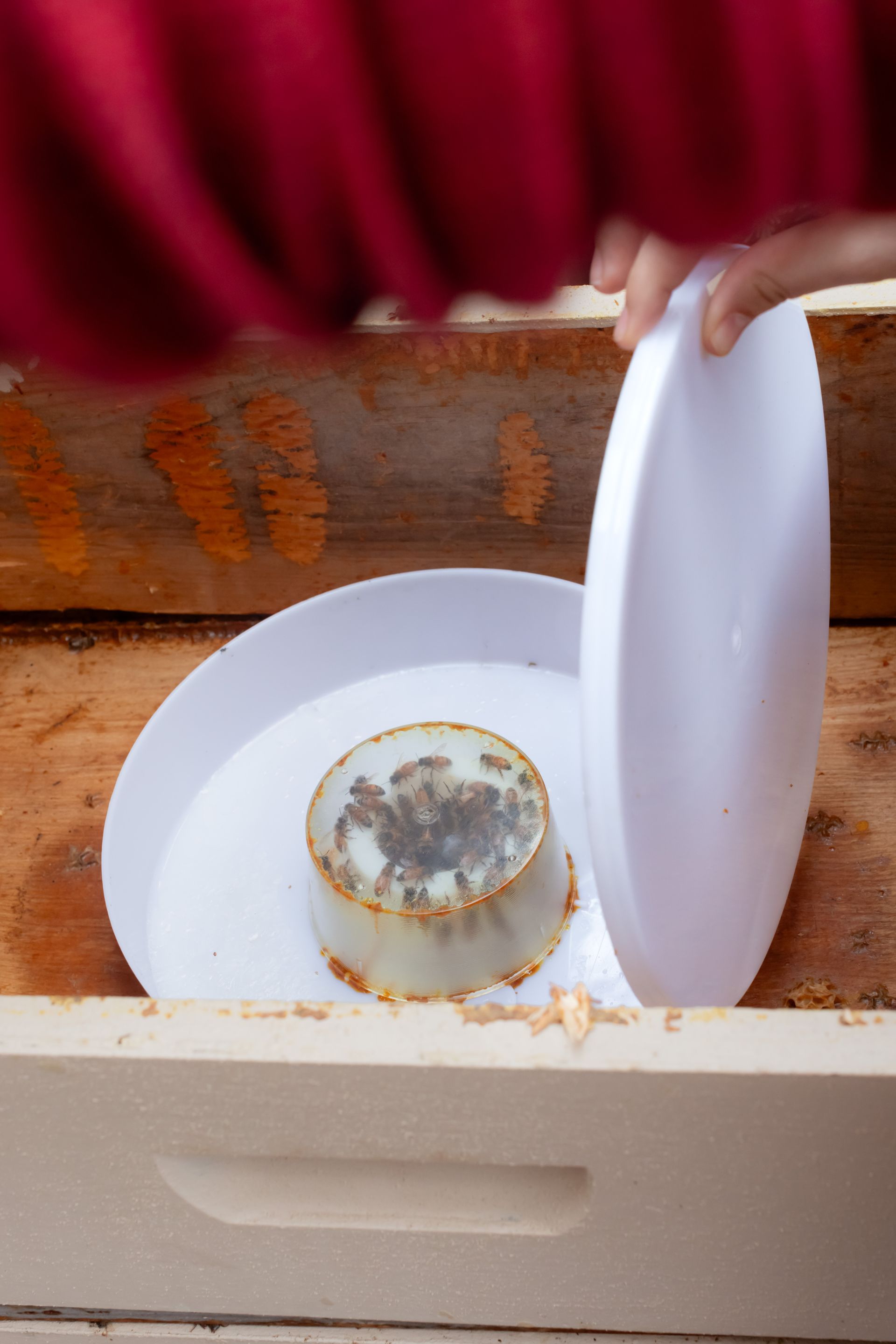
"What happens to bees when pesticides are used in a garden?"
"How can we care for the living things in our immediate environment?"
These discussions foster empathy, stewardship, and a lasting respect for the web of life.
Dual Learning Environments: The Classroom & The Campus
A core principle of our biology curriculum is that learning takes place in two complementary environments: the classroom and the natural world around us.
Students might study the anatomical structure of a leaf indoors, then step outside onto our grounds to identify those same structures in real time. Whether observing insects in our garden beds or studying local plant life, this seamless transition between classroom study and outdoor observation deepens understanding and strengthens their connection to nature.
How Families Can Support a Love of Biology at Home
You do not need to be a scientist to cultivate a deep love for the natural world in your child. Here are six simple ways to encourage biological curiosity at home:
- Go Outside Often: Regular walks in your neighborhood, visits to local parks, or time in the backyard offer endless opportunities for observation.
- Support Natural Collecting: Encourage your child to collect leaves, rocks, or shells. Use these treasures to spark questions and further research.
- Model Curiosity: If your child asks a complex question about nature, it's wonderful to say, "I wonder that too. Let's find out together."
- Keep a Nature Journal: Provide a notebook for your child to sketch, label, and write about what they observe outdoors.
- Ask Big Questions: Engage their imagination with topics like camouflage, migration, or how desert plants survive without rain.
- Share Your Own Passions: If you enjoy gardening, hiking, or birdwatching, invite your child to join you. Your authentic interest is contagious.
From Biology to Ecology
As children progress in their biological studies at MANJ, their learning naturally expands into ecology—the study of how living and non-living systems interact. This broader understanding reinforces that we are all part of an intricate, beautiful, and interdependent world.
Experience Montessori in Action
We invite you to see how our classrooms cultivate a lifelong love for learning, science, and the natural world.
Schedule a tour today!