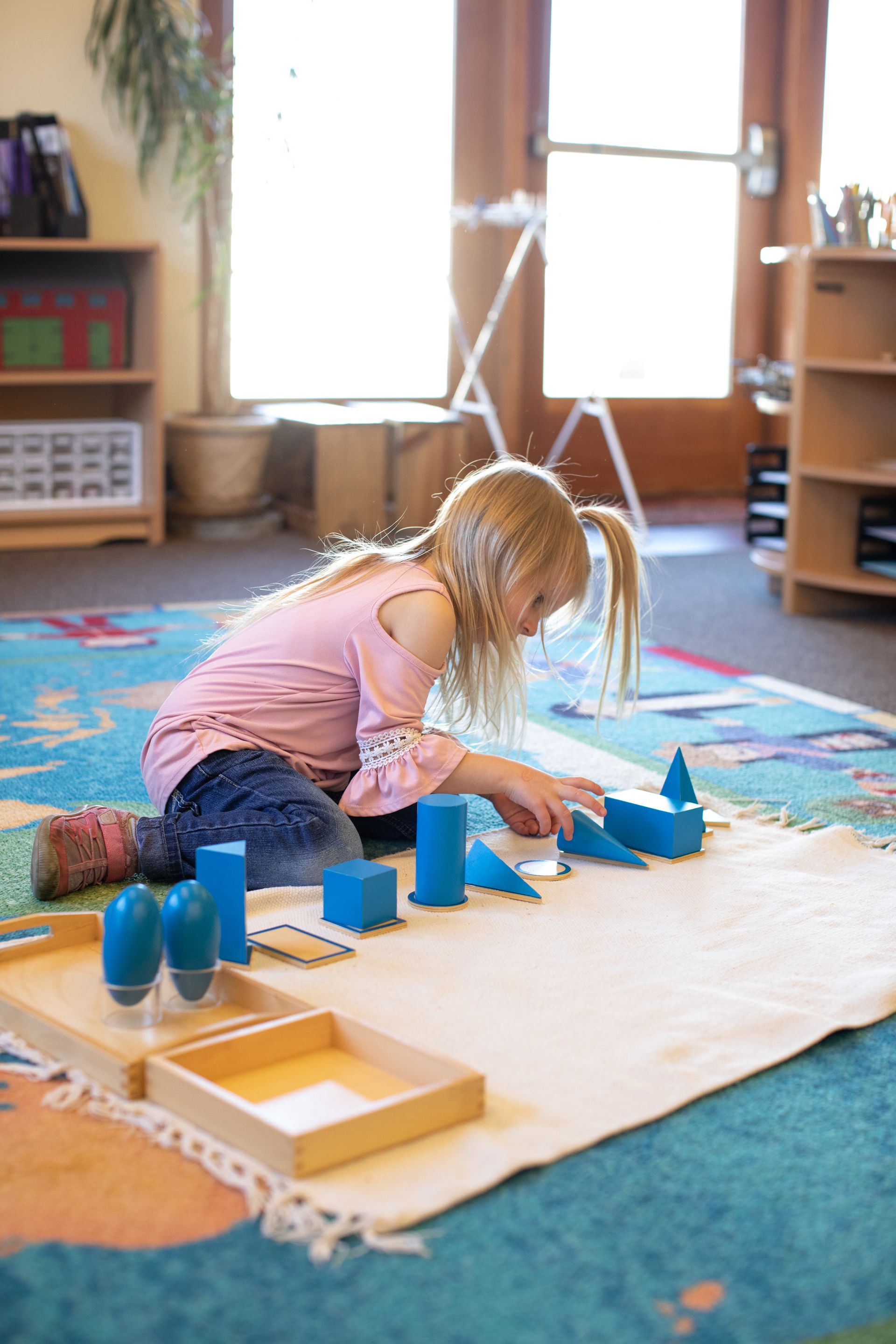
Have you ever wondered how young children seem to learn without ever being formally taught? One day, they suddenly begin speaking full sentences, walking with steady balance, or mimicking our subtle facial expressions with astonishing precision.
Dr. Maria Montessori described this unique power of early learning as the Absorbent Mind—a special, biologically timed mental function unique to children during their first six years of life.
At Montessori Academy of New Jersey (MANJ), our Toddler and Primary environments are specifically constructed to support and nourish this foundational stage of human development.
The Absorbent Mind vs. the Adult Mind
The mind of a young child operates fundamentally differently than that of an adult.
Adults learn through conscious effort. We study, repeat, memorize, and filter information. Children, by contrast, absorb knowledge directly and continuously into their being without conscious effort. During these early years, incredible neural plasticity shapes their brains in direct response to their physical and emotional experiences.
To illustrate this profound difference, Dr. Montessori compared the adult mind to a painter and the child’s mind to a camera:
- The Adult Mind (The Painter): Chooses what to focus on, selects details, filters out distractions, and interprets the scene before painting.
- The Child’s Mind (The Camera): Takes in the entire environment all at once—every detail, whether beautiful or chaotic, calm or stressful—without judgment or discrimination.
"Adults admire their environment, they can remember it and think about it; but the child absorbs it. The things he sees are not just remembered; they form part of his soul. He incarnates in himself all in the world about him that his eyes see and his ears hear."
— Dr. Maria Montessori, The Absorbent Mind
Key Characteristics of the Absorbent Mind
The Absorbent Mind is present at birth and naturally begins to fade around six years of age. During this precious window, a child's mind acts as fertile soil for every impression offered by their surroundings.
- Totality of Impressions: Children do not just absorb sights and sounds; they absorb emotional tones, adult relationships, and social dynamics.
- Lack of Discrimination: Young children cannot filter out negative or chaotic influences. Everything in their physical and emotional atmosphere becomes part of their inner world.
- Guided by Sensitive Periods: Children experience temporary windows of growth where they are irresistibly drawn to specific skills, such as language acquisition, physical order, precise movement, and social grace.
- Facilitates Adaptation: Through absorption, children naturally adapt to their specific culture, family customs, and language without needing formal instruction.
The Two Phases: Unconscious to Conscious
Montessori divided this developmental period into two distinct stages:
1. The Unconscious Absorbent Mind (Birth to 3 Years)
During this first stage, infants and toddlers take in environmental impressions unconsciously. They are constructing the core mental faculties that will serve them for a lifetime: speech, physical coordination, thought patterns, and social connection. Nature acts as their inner guide. Adults cannot teach these skills directly; our role is to provide a safe, prepared space and avoid getting in the way of their natural drive to explore.
2. The Conscious Absorbent Mind (3 to 6 Years)
Around age three, children begin to organize and classify the vast collection of impressions they previously absorbed. This is when a deep need for order emerges.
In our Primary classrooms at MANJ, we provide specialized sensorial materials that help children organize, categorize, compare, and refine their understanding of color, dimension, texture, sound, and shape. During this stage, memory, reasoning, and willpower strengthen through intentional choices, repetition, and purposeful work.
How Families Can Support the Absorbent Mind at Home
Because young children absorb everything around them, the quality of their home environment matters deeply. Here are four practical ways to support your child’s natural learning process at home:
- Maintain Environmental Order: Keep living spaces tidy, predictable, and accessible. Physical order in the home directly supports the creation of mental order in the child.
- Use Rich, Clear Language: Speak directly to your child with clear pronunciation, proper grammar, and a diverse vocabulary. Your tone of voice becomes their internal self-talk.
- Encourage Functional Independence: Allow children to participate in daily practical life activities—dressing themselves, pouring water, wiping spills, and preparing meals.
- Mind the Emotional Climate: Children absorb the emotional atmosphere of a room as easily as language. Cultivating patience, calm responses, and respectful communication models the behavior you wish to see.
Experiencing the Prepared Environment at MANJ
The Absorbent Mind is a true superpower. Through it, children build the foundation of their future personality, intelligence, character, and cultural belonging.
At Montessori Academy of New Jersey, every shelf, material, and interaction in our Infant, Toddler, and Primary classrooms is designed to honor this unique window of development.
See Montessori in Action
We invite you to
tour our school to observe how our prepared environments support your child’s natural ability to learn and grow.