
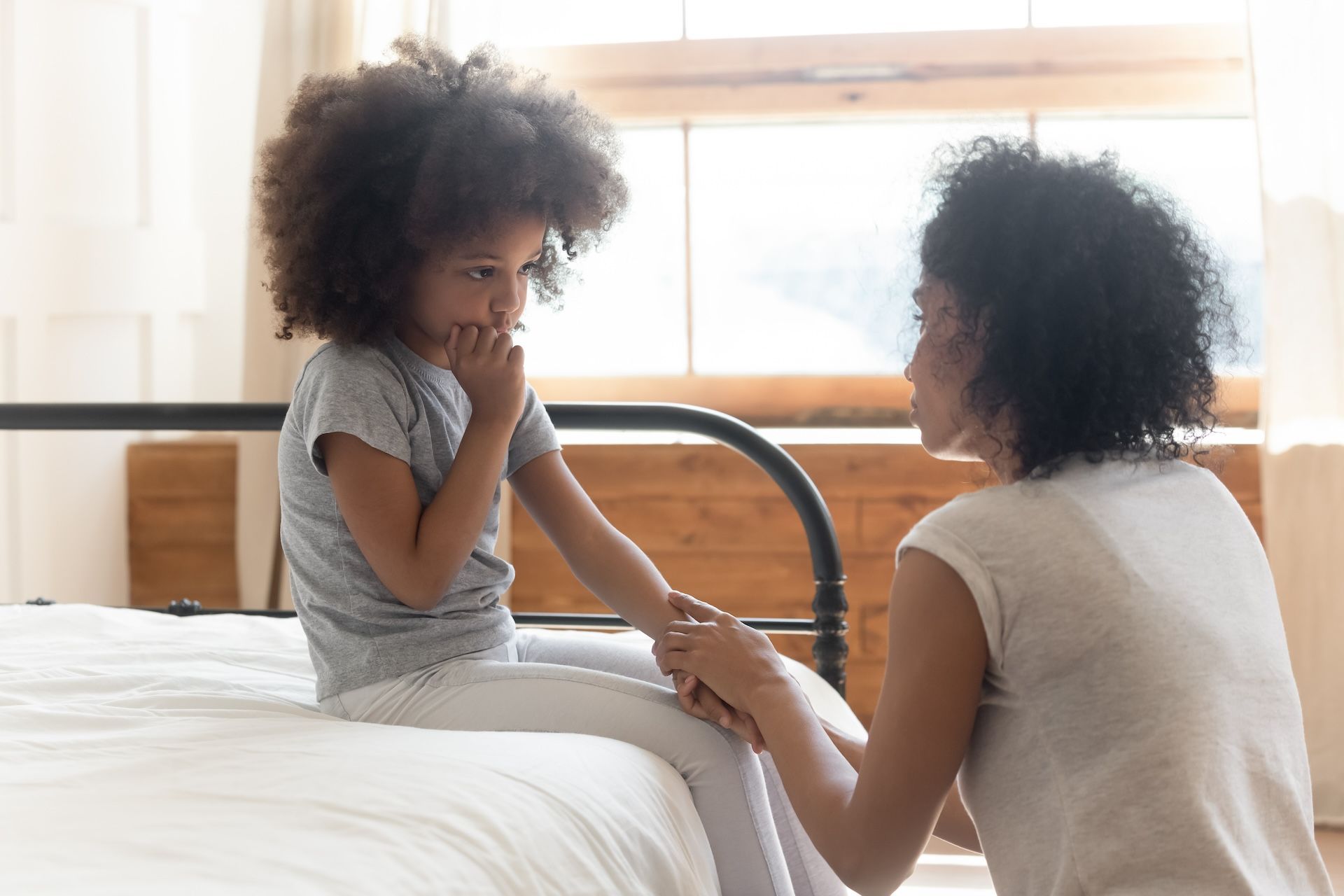
Looking Deeper: Understanding Needs Behind Behaviors
June 10, 2024
Looking Deeper: Understanding Needs Behind Behaviors

Now that we are transitioning into the summer months, it’s a good time to take stock of some family dynamics. Usually when thinking about how things are going, we focus on children’s behaviors. Yet reflecting upon ourselves and our actions can also be a helpful first step.


First Look at Needs


Psychiatrist Rudolf Dreikurs has explored how human behavior has a purpose. Sometimes we are aware of the purpose and sometimes it is unconscious. Through his work with children, Dreikurs described how to understand behavior by first acknowledging the needs a person is trying to fulfill.


At the most basic level, we all need food, sleep, love, and protection. Certainly, if children (or adults) are starting to act out in some way, the first question to ask is if they are hungry, tired, or not feeling well. Once those basic needs are met, we can consider what else might be at play. 


As humans, our need for belonging, connection, or significance is a strong force. If we don’t feel loved or accepted, we may do something (often unconsciously) to get affection or attention, maybe lash out to get even with whoever doesn't seem to be noticing these needs, or perhaps even retreat into a discouraged mode.


Understand Mistaken Goals


Dreikurs identified how many behaviors stem from four mistaken goals: the desire for attention, the need for power, the hunger for revenge, and the assumption of inadequacy. If our goal is attention, the coded message behind the behavior is "notice me" or "involve me usefully" If we need power, our behavior sends the message that we need meaningful ways to contribute. If we are trying to get revenge, we are communicating that we are hurting or need our feelings validated. And when we assume inadequacy by giving up or wanting to be left alone, the message behind the behavior is that we need people to believe in us and show small steps toward success.


Although Dreikurs focused on children, the principles apply to us all. When we "act out," what are we trying to communicate to those around us? First and foremost, we should check and see if our basic needs are being met. Are we taking time to breathe? Are we eating nourishing food? Are we getting substantial sleep? If we are taking care of our basic needs, we can reflect upon what else might unconsciously be motivating our actions. Do we need someone to notice our efforts? Do we feel powerful in our lives? Are we doing work that matters? Are we holding onto a grudge? Are we discouraged?


Practice Self-Acceptance


Children need the adults in their lives to peer behind their behavior, consider underlying causes, and provide empowering support. As adults, however, we often need to do this for ourselves first. At the heart of the process is self-acceptance. We need to love ourselves unconditionally and give ourselves the time and space to attend to our unconscious motivations. 


One of the first acts of loving kindness we can do is take care of ourselves, notice our own needs, and patiently honor our efforts. When we are clear about our own needs, we can then be more effective in interpreting our children’s unmet or unspoken needs. 


Examine the Clues


Once we have given ourselves some grace, we can better pause and notice what might be behind our children’s behavior. If we’ve considered our own unmet needs, we can have more empathy for what might be unconsciously motivating our children. 


A key to this is to see what emotions we feel when our children act out in some way. The Positive Discipline approach, which is based on Dreikurs’ work, offers a helpful tool called the Mistaken Goal Chart


When our children display some sort of bothersome or upsetting behavior, we can use this chart to hone in on three significant clues that let us know what our children actually need. 


The first clue can be found in recognizing what emotions our children’s behavior brings up for us. Do we feel annoyed and irritated, angry and challenged, hurt and disappointed, or hopeless and inadequate? 


The next clue is how we react to the behavior. Do we coax? Give in? Fight back? Retaliate? Give up? Try to over-help?


The third clue is how our children respond to our reactions. Do they stop temporarily but then resume the behavior? Does the behavior intensify? Is there retaliation? Or just passivity?


Peel Back the Layers


By using the Mistaken Goal Chart, we can begin to peel back the layers and start to understand what beliefs may be underlying children’s behaviors. This process helps us also look at how we may be contributing to the behavior and what the coded messages mean. Once we understand all of those pieces we can shift our responses so as to better empower our children in proactive and helpful ways. 


Rather than falling into unconscious patterns this summer, let’s first consider and acknowledge our own unspoken needs and proactive ways to take care of ourselves. Then, let’s take the same compassionate approach with our children. Often, we all just need to feel a sense of belonging, connection, and significance. Here’s to creating that together this summer!


As always, please also feel free to schedule a visit. We love connecting about all things children and child-rearing!




Teacher reading with young children, modeling attentive adult presence in early learning.
March 16, 2026
A child’s early learning is shaped by the presence of the adults around them. This post explores how mindful movement, language, and boundaries support security and independence in the early years.
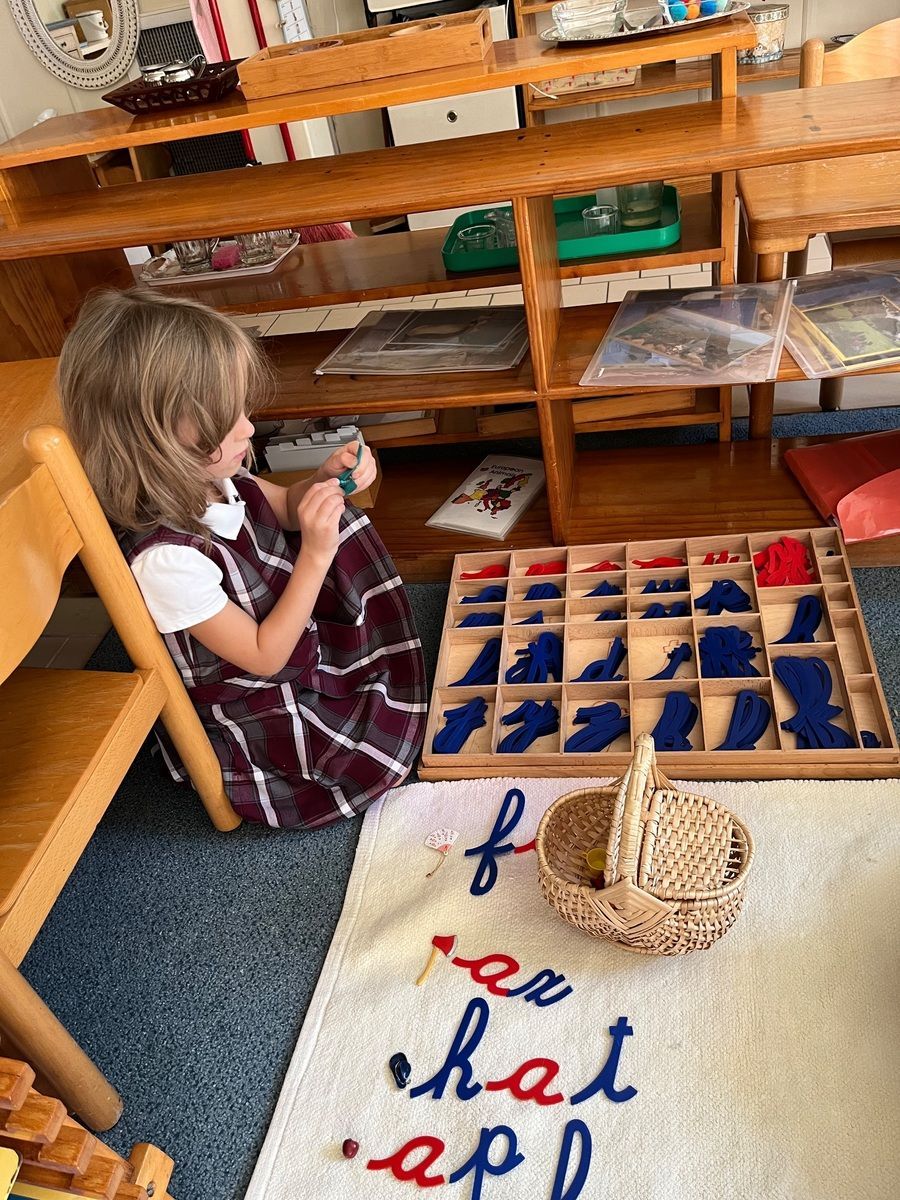
Child using color-coded word cards to explore pronouns in a Montessori language activity.
March 9, 2026
When children begin working with pronouns in Montessori, they are not learning something entirely new. Instead, they are bringing to consciousness language they already use every day. Pronoun work builds slowly and intentionally. It is not about mastering grammar rules, but about understanding how language functions and how meaning is carried when words stand in for one another. Beginning With Experience, Not Explanation Montessori pronoun work begins with movement and spoken language, not written grammar. We start with little oral games to highlight how a pronoun functions, sometimes eliminating the pronoun (“Josie and John and Jack and Josiah are walking around the table.”) and other times emphasizing the pronoun (“They are walking around the table.”). The children love acting out the phrases, sometimes chanting, moving, watching one another, and laughing. Through these physical experiences, they begin to notice that we don’t always use names when we speak. Certain words take the place of a noun, and the meaning is still clear. At this stage, we don’t offer the term pronoun because we want children to simply experience its function. From Movement to Sentences Once children are ready for more structured language work, we introduce them to the Pronoun Grammar Box so they can build and rebuild sentences using color-coded cards for each part of speech. From one sentence to the next, only a few words change as nouns get replaced by pronouns. By comparing sentences, children discover that although the word changes, the sentence still makes sense. This comparison is essential. Rather than being told what a pronoun is, children see what it does. We then invite children to add grammar symbols to the sentence (noun, article, adjective, verb, preposition, adverb) until we finally draw attention to the remaining word: “This word is used in place of a noun.” Only then do we introduce the pronoun symbol: a purple isosceles triangle, the height of the noun symbol. Montessori Lore: The Pronoun’s Story There’s a beloved story about the pronoun symbol. Long ago, the pronoun was shorter and a different color. Wanting to be as important as the noun, it stretched itself taller and taller to reach the same height. As it stretched, its base became smaller and it turned purple from the effort of standing in the noun’s place. It’s a poetic reminder of what children discover through their work: a pronoun depends on the noun, borrowing its meaning while standing in for it. Why Pronouns Come Later Pronouns are more abstract than other parts of speech. To understand a pronoun, children must already have a strong, concrete understanding of the noun. For this reason, pronouns (along with interjections) are typically introduced later than other grammar symbols, often in the elementary years. Even then, one lesson is not enough. In Montessori, the real learning happens after the presentation, when we step back and children work independently with the material. The guide’s role is to show how to use the material, not to explain grammar in detail. Understanding emerges through repeated use. Deepening Understanding Through Play and Exploration As children grow more confident, the work expands to include: Transposition games, where pronouns are removed or replaced to explore how meaning changes. Command cards, which physically isolate pronouns through action. Personal pronoun charts, introducing first, second, and third person (singular and plural) through storytelling. The Verb Family, where children explore the close relationship between the verb, adverb, and pronoun. Children discover that pronouns often work closely with verbs, helping to carry action and meaning through a sentence. Subtleties Come Later At first, Montessori avoids getting caught in fine distinctions. Over time, children may explore nuances such as the difference between possessive pronouns (the book is mine) and possessive adjectives (my book). These discussions often happen later, sometimes with the support of grammar references, once children have a solid foundation. Language Revealed, Not Taught Through this carefully layered progression of movement, sentence work, symbols, and exploration, children develop a deep understanding of how words function differently in sentences. Montessori grammar invites children to discover how language works at their own pace through hands-on exploration. We don’t rush this process. So by the time children are ready to name the pronoun, it’s not a new idea. It’s something they already know. We invite you to visit our classrooms in Delran, New Jersey to see firsthand the children’s joy of learning!