Valorization: Helping Adolescents Experience Their Own Worth
December 15, 2025
Montessori child reading a book in cozy space, building focus, imagination, and love of stories.

In Montessori, we recognize that every young person needs to feel they belong, that they are capable, and that they have something of value to contribute to their world. This process of valorization, of coming to know one’s own worth through effort, adaptation, and usefulness, is at the heart of these important human needs.


The Experience of Belonging


Adolescents are entering a new and uncertain territory. They are leaving behind the familiarity of childhood and finding their way in a larger, more complex social world.
What helps them to feel at home? What protects them from feeling lost?


The answer lies in experience. They need the lived understanding that they can adapt, contribute, and make themselves useful. They need the confidence that, no matter the challenge, they have within them the capacity to meet it. 


This is not something that can be told to adolescents. Rather, they need to live and earn this through real activity, through purposeful work, and through freedom and responsibility. That lived experience provides valorization, a deep inner experience of usefulness and purpose.


The Roots of Confidence


Valorization is not the result of praise, good grades, or awards. It is the result of work and effort. It is the result of doing something real and discovering that you actually can do it.


We see the beginnings of this process when a toddler insists, “I do it myself.” That same drive for independence grows and transforms over time. In our Montessori environments, we support this process as the young child learns through purposeful activity in a prepared environment, the elementary child tests fairness, justice, and morality in the social world, and the adolescent seeks belonging and contribution through meaningful work in a social context.


At each stage, children are constructing their selves. They are testing the match between their growing capacities and the environment around them. When those conditions are right, when freedom and responsibility coexist, valorization occurs. Young people feel useful. They feel their own worth.


Independence, Normalization, and Adaptation


Dr. Montessori saw human development as a process of self-construction within the particular culture, people, and environment into which a child is born. To thrive, children must adapt to this territory through independence, interaction, and activity.


When the environment welcomes children and allows freedom to move, to choose, and to act, these psychic threads of connection grow strong. Children feel they belong.


But when freedom is restricted, or when the environment doesn’t meet developmental needs, children may feel alienated. They lose that sense of being able to connect and contribute. They begin to feel disconnected in their own world.


Deeply Experienced Usefulness


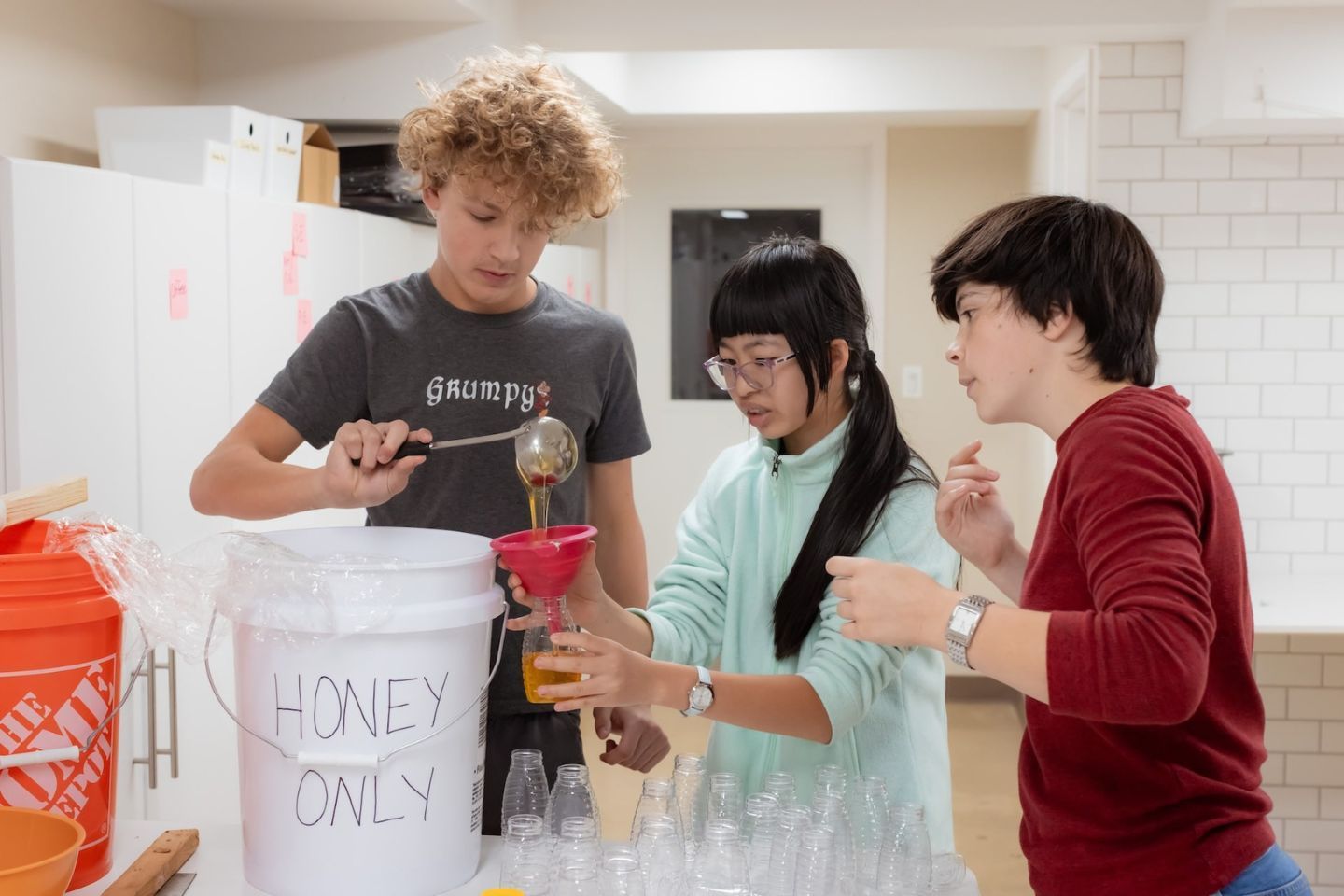
For the adolescent, valorization comes through work that matters, work that contributes to the life of the community. In Montessori programs, this may take the form of practical projects, environmental stewardship, community building, or social enterprise. But at its heart, it is not about the task itself. It is about the inner experience of usefulness.


When adolescents lead a group project, mentor a younger peer, fix a tool, or tend to animals, they experience themselves as capable and needed. They know they matter.


And once they know this, they are strengthened. They have courage. They are ready for more.


A Lifelong Process


Valorization is not a single event. It is a continuous process that unfolds through every stage of life. We experience it each time we adapt to a new challenge and find that we can meet it. Think about the infant reaching for an object with determination, the preschooler insisting on pouring their own water, the elementary child working through a problem with a friend, and the adolescent finding purpose in meaningful work.


Each is an act of self-construction, a declaration of worth, and a rehearsal for the life of an independent, resilient adult.


Trusting the Process


In Education for a New World, Dr. Montessori said, “We must take a new path, seeking the release of human potentialities.” 


That path requires trust. Trust in the child’s inner guide, in the process of development, and in the power of purposeful work.


Valorization is not something we can teach. It is something we must prepare for.
Our role is to create the conditions where valorization can unfold: an environment rich with real responsibility, freedom, and meaningful human connection.


When we do, children come to know, deep within themselves, that they are capable, adaptable, and valuable. They no longer feel out of place in the world. They feel at home within it.


Come to Delran to see how Montessori Academy helps young people feel at home throughout their many stages of development.

Child using color-coded word cards to explore pronouns in a Montessori language activity.
March 9, 2026
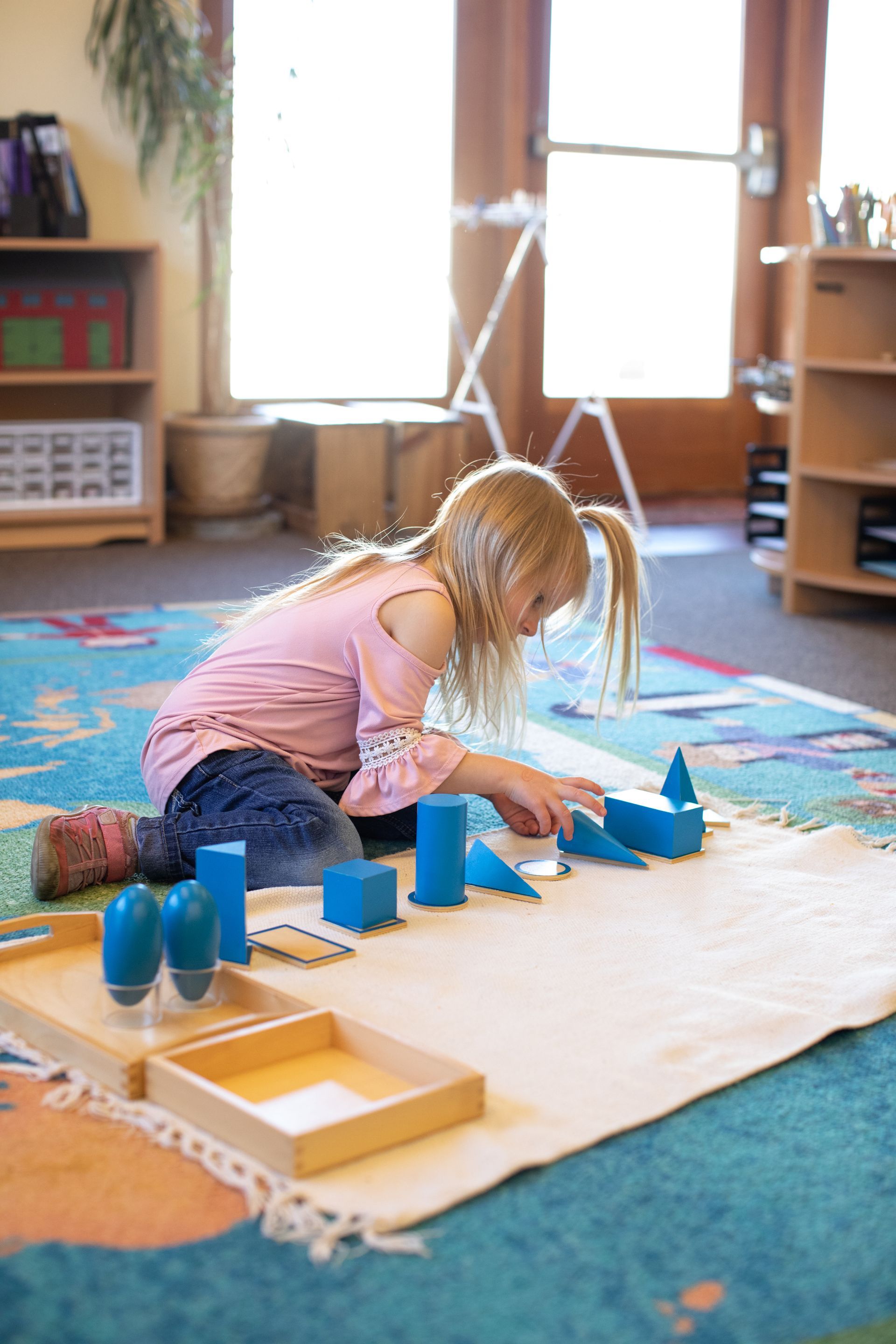
When children begin working with pronouns in Montessori, they are not learning something entirely new. Instead, they are bringing to consciousness language they already use every day. Pronoun work builds slowly and intentionally. It is not about mastering grammar rules, but about understanding how language functions and how meaning is carried when words stand in for one another. Beginning With Experience, Not Explanation Montessori pronoun work begins with movement and spoken language, not written grammar. We start with little oral games to highlight how a pronoun functions, sometimes eliminating the pronoun (“Josie and John and Jack and Josiah are walking around the table.”) and other times emphasizing the pronoun (“They are walking around the table.”). The children love acting out the phrases, sometimes chanting, moving, watching one another, and laughing. Through these physical experiences, they begin to notice that we don’t always use names when we speak. Certain words take the place of a noun, and the meaning is still clear. At this stage, we don’t offer the term pronoun because we want children to simply experience its function. From Movement to Sentences Once children are ready for more structured language work, we introduce them to the Pronoun Grammar Box so they can build and rebuild sentences using color-coded cards for each part of speech. From one sentence to the next, only a few words change as nouns get replaced by pronouns. By comparing sentences, children discover that although the word changes, the sentence still makes sense. This comparison is essential. Rather than being told what a pronoun is, children see what it does. We then invite children to add grammar symbols to the sentence (noun, article, adjective, verb, preposition, adverb) until we finally draw attention to the remaining word: “This word is used in place of a noun.” Only then do we introduce the pronoun symbol: a purple isosceles triangle, the height of the noun symbol. Montessori Lore: The Pronoun’s Story There’s a beloved story about the pronoun symbol. Long ago, the pronoun was shorter and a different color. Wanting to be as important as the noun, it stretched itself taller and taller to reach the same height. As it stretched, its base became smaller and it turned purple from the effort of standing in the noun’s place. It’s a poetic reminder of what children discover through their work: a pronoun depends on the noun, borrowing its meaning while standing in for it. Why Pronouns Come Later Pronouns are more abstract than other parts of speech. To understand a pronoun, children must already have a strong, concrete understanding of the noun. For this reason, pronouns (along with interjections) are typically introduced later than other grammar symbols, often in the elementary years. Even then, one lesson is not enough. In Montessori, the real learning happens after the presentation, when we step back and children work independently with the material. The guide’s role is to show how to use the material, not to explain grammar in detail. Understanding emerges through repeated use. Deepening Understanding Through Play and Exploration As children grow more confident, the work expands to include: Transposition games, where pronouns are removed or replaced to explore how meaning changes. Command cards, which physically isolate pronouns through action. Personal pronoun charts, introducing first, second, and third person (singular and plural) through storytelling. The Verb Family, where children explore the close relationship between the verb, adverb, and pronoun. Children discover that pronouns often work closely with verbs, helping to carry action and meaning through a sentence. Subtleties Come Later At first, Montessori avoids getting caught in fine distinctions. Over time, children may explore nuances such as the difference between possessive pronouns (the book is mine) and possessive adjectives (my book). These discussions often happen later, sometimes with the support of grammar references, once children have a solid foundation. Language Revealed, Not Taught Through this carefully layered progression of movement, sentence work, symbols, and exploration, children develop a deep understanding of how words function differently in sentences. Montessori grammar invites children to discover how language works at their own pace through hands-on exploration. We don’t rush this process. So by the time children are ready to name the pronoun, it’s not a new idea. It’s something they already know. We invite you to visit our classrooms in Delran, New Jersey to see firsthand the children’s joy of learning!
Newborn baby sleeping peacefully, illustrating Montessori-inspired healthy infant sleep.
March 2, 2026
Sleep is a skill children develop with support, trust, and preparation. This reflection explores how Montessori philosophy aligns with sleep science to support healthy rest for children and parents.