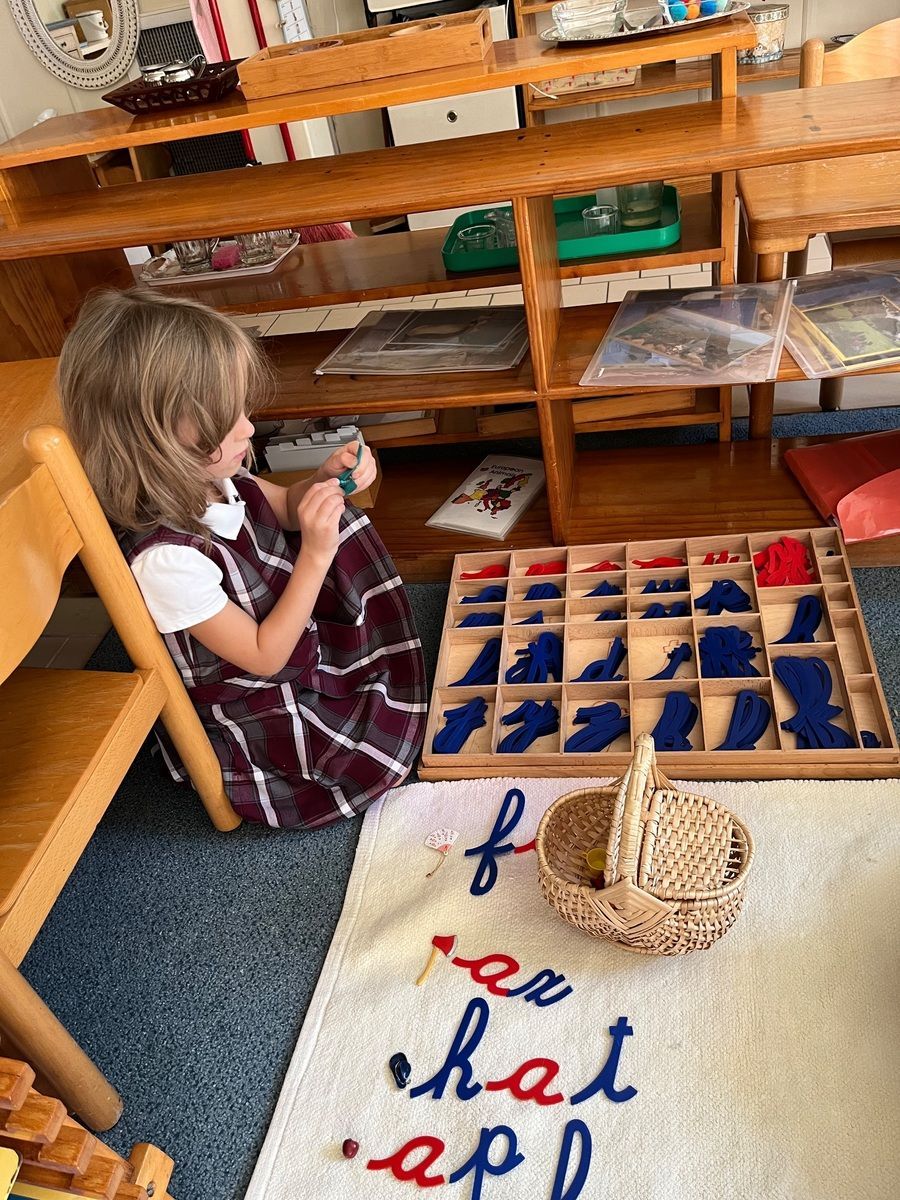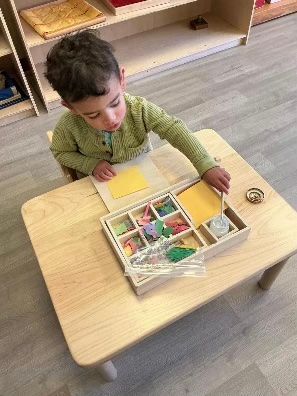
So what’s the deal with Montessori and fantasy? Does Montessori encourage creativity? What about imagination? Don’t children love make-believe?
A lot of the questions we hear like this often emerge due to some misconceptions about the relationship between Montessori philosophy and concepts of fantasy, imagination, and creativity.
What is imagination?
Imagination allows us to visualize things that aren’t present or haven’t been experienced directly. We use our imagination to be creative, solve problems, generate ideas, and explore possibilities. Our imagination allows us to take in information and organize it in new and creative ways. Imagination is a central aspect of childhood. As children shift from early childhood into their elementary years, they are able to use their imagination almost like a superpower to explore ideas and concepts throughout time and space.
What is creativity?
Creativity is how we generate new ideas, sometimes in artistic ways. It allows us to come up with original concepts or solutions, often because we are thinking about something in a new or different way. Creativity also helps us transform ideas and approach problems from a unique perspective. It is cultivated over time through exposure to different kinds of sensory input and appropriate freedom and support for creative expression.
What is fantasy?
Fantasy is a diversion from reality. It is the realm of make-believe. We use our imagination to create fantasy because it involves things that are impossible or improbable. But unlike imagination, which can encompass a wide range of ideas, fantasy is focused on the extraordinary and the fantastical. When thinking about or immersed in fantasy, we do not worry much about reality.
One misconception is that Montessori doesn’t allow fantasy. To explore this, we should also recognize that there is self-generated fantasy and imposed fantasy.
Pretend Play vs. Adult-Generated Fantasy
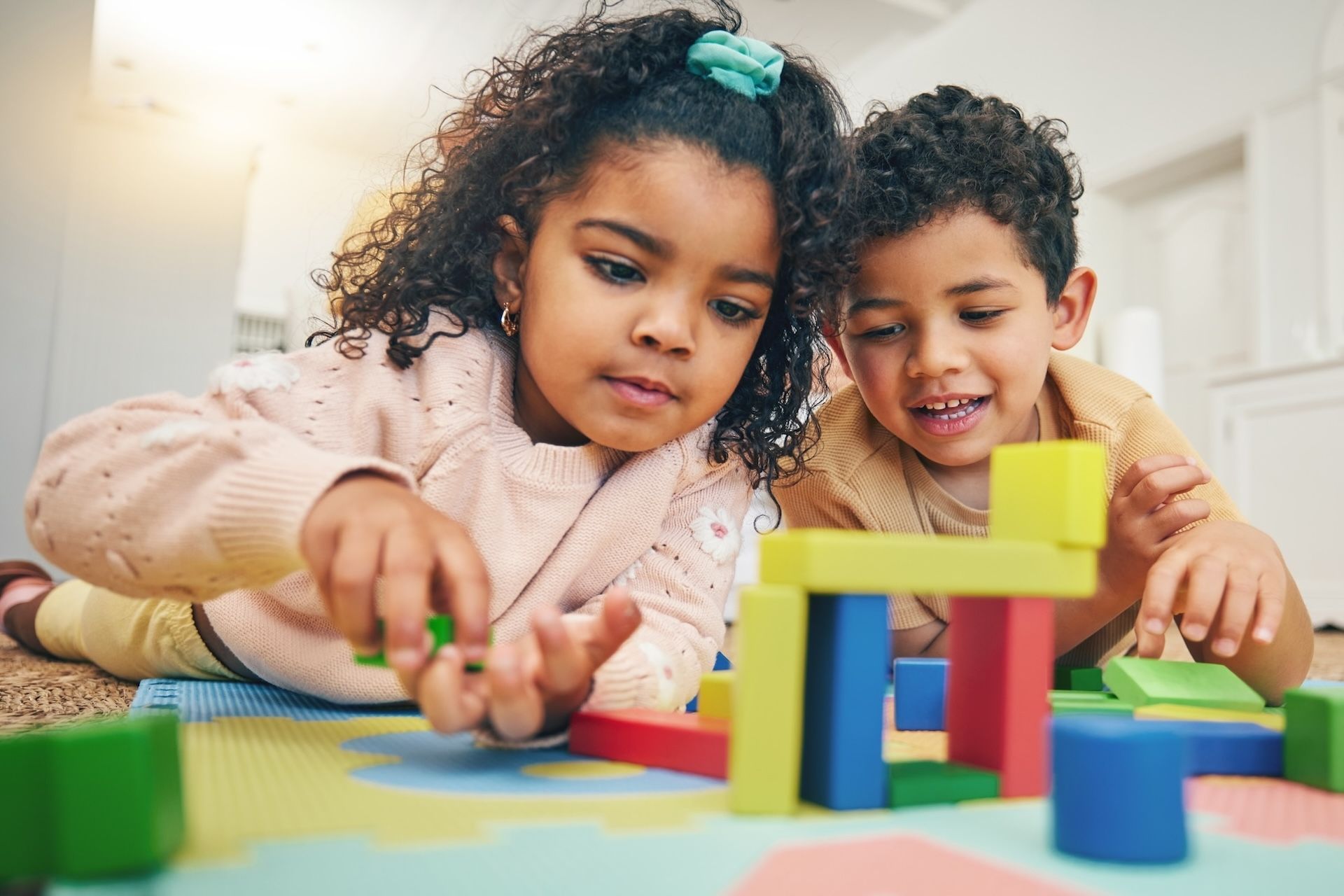
Children love to engage in pretend play, a self-generated form of fantasy. Often, in pretend play, children explore roles they see in real life by pretending to be in those roles. It’s pretend for them, but they are working out what different roles mean. Whether pretending to play school or house or creating a construction scene with excavators, this is young children’s way of processing the world around them.
Where pretend play can become confusing for young children is when they have seen different kinds of fantastical things that seem real, such as Superman jumping off a building or a normal boy turning into Spiderman by being bitten by a spider.
Young children are still distinguishing the line between fantasy and reality. It’s worth noting that even if our young children can repeat back that they know something is real or pretend, a true cognitive understanding of the difference doesn’t fully form until children developmentally shift into their elementary years. This is why we sometimes see children trying to get bitten by a spider so they can become Spiderman, or trying to jump off the top of the stairs so they can fly like Superman.
As adults, we have a tremendous responsibility to allow children to create their own fantasy rather than imposing fantasy on them. For example, superheroes, fairy tales, and fictitious animated characters are adult-created fantasy. When we impose fantasy on our children, even if they like it, we are inadvertently depriving them of the opportunity to develop their own imagination. If children are in awe of adult-created fantasy, their creative expression often becomes more limited because they are trying to recreate something others have imagined.
The Real World is Amazing
From birth to about age six, children effortlessly absorb everything about the world. They are like sponges! This is the time when we want to introduce children to all sorts of exciting information. The options are almost limitless: species of mammals, names of flowers, land and water forms, countries in all the continents, types of clouds, pollinators, geometric solids, types of triangles, and the list goes on.
Children are fascinated by the natural world. They gain so much inspiration from their sensory explorations and interactions in their environment. Neurologically, young children are developing mental order and categorization for all their future understanding. We want to give them real information so that they have a solid foundation for their imagination and creativity to truly soar.
If we introduce children to fantastical, unreal things during the early years of their development, we divert their learning from what is amazing and wondrous about the world. In the process, we also create unnecessary confusion. For children who are still learning to discern the difference, the world of fantasy can be disorienting and even, at times, frightening.
As adults, we understand the difference between reality and fantasy, and there are times when we enjoy the diversion into the world of fantasy. For our youngest children, let’s give them the gift of building their understanding of the truly remarkable world around them. By doing so, we help them lay the foundation for a rich imaginative, and creative life.
Curious to see more about how Montessori inspires creativity and imagination? Schedule a visit to our school. We’d love to connect with you!